
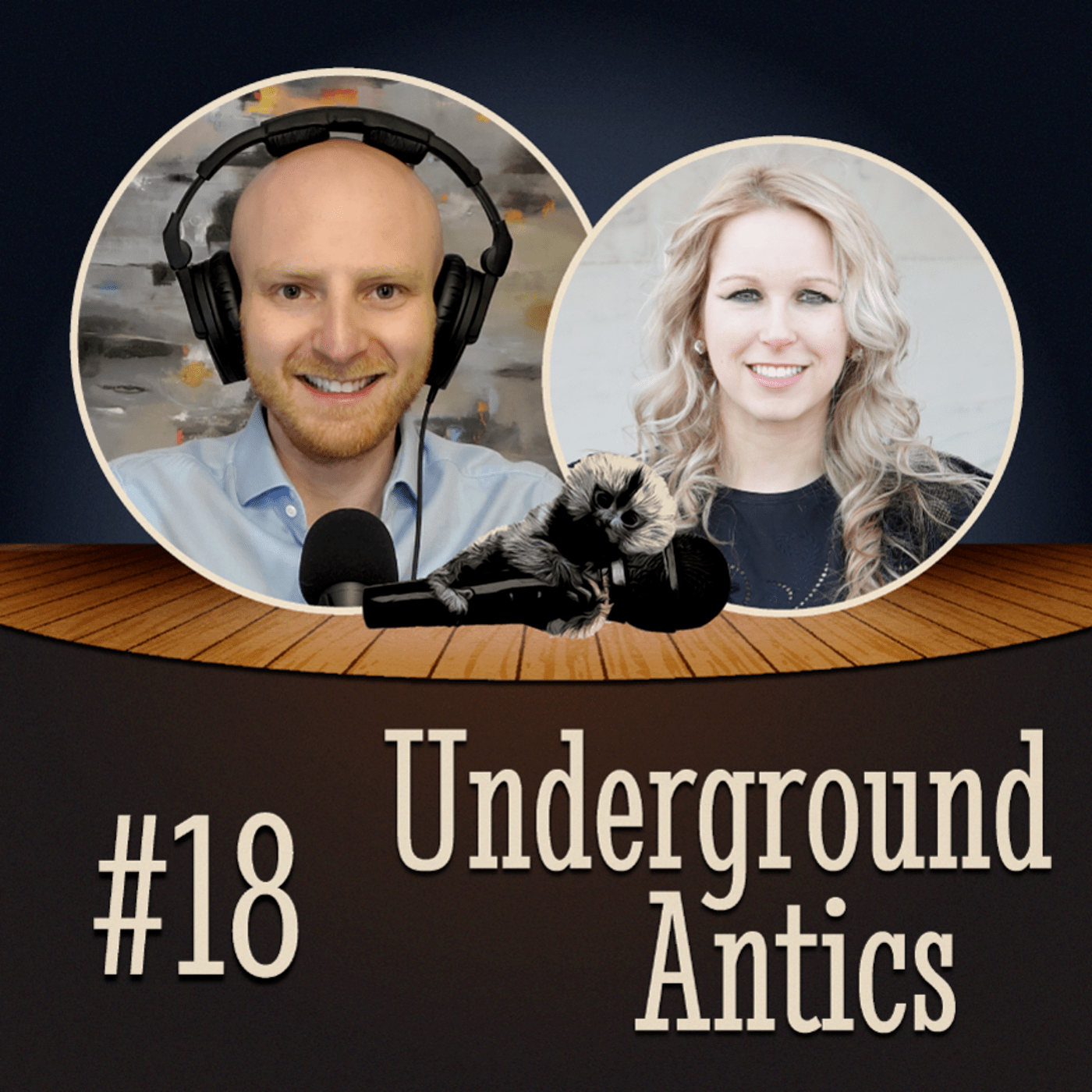
Dr. Hilary Marusak is a tenure-track Assistant Professor in the Department of Psychiatry and Behavioral Neurosciences, Wayne State University School of Medicine and directs the THINK lab (www.wsuthinklab.com) . She is also an Adjunct Assistant. In this episode, Dr. Hilary Marusak and I discuss some of the latest neuroscientific research on how meditation affects various brain systems. Meditation has been used by humans for thousands of years as a tool for self-regulation, healing, strengthening, and resilience development. And recently, the modern scientific community has begun to investigate how meditation works, which brain systems are involved, and how it can be used therapeutically. The practice of meditation comes in many different forms, and can be applied to many different areas of a person’s life. Hilary’s research focuses primarily on how meditation affects kids, and how it can be used as a therapeutic tool for kids who are dealing with pain, illness, and emotional dysregulation.

We also discuss some of the latest science of cannabis and how the scientific community are working towards gaining a better understanding of the relationship and interaction between cannabis and the endocannabinoid system. Just as meditation has been used by humans for thousands of years, so too has cannabis played a role in many healing traditions in human history. The exact nature of how cannabis affects the body and brain is still largely unstudied and is an exciting field of research. While using cannabis for medicinal purposes has started to rise in society (with the recent legalization), there are also some risks. As the body of scientific literature develops over time, our ability to make educated and informed decisions regarding cannabis use will also increase. Hilary and I also explore some of her research into how cannabis affects the developing brain (i.e. in fetuses, children, and teenagers). While these areas of study are still relatively new, it’s an exciting time to be in this field and studying the potential benefits and risks of cannabis.


Dr Hilary Marusak
Dr. Hilary Marusak is a tenure-track Assistant Professor in the Department of Psychiatry and Behavioral Neurosciences, Wayne State University School of Medicine and directs the THINK lab (www.wsuthinklab.com) . She is also an Adjunct Assistant Professor in the Merrill Palmer Skillman Institute for Child and Family Development, a Scientific Member of the Karmanos Cancer Institute and the CURES Center, and a Science Advisor for the nonprofit organization Kids Kicking Cancer. She hosts her own podcast about the brain and brain disorders, called BrainSTEM (www.brainstempodcast.com).

Dr Hilary’s Podcast: BrainSTEM
A podcast for anyone interested in the brain or brain disorders, hosted by neuroscientist Dr. Hilary Marusak and produced by Amanpreet and Manmeet Bhogal. Each episode interviews someone affected by a brain disorder and an expert. We cover a range of neurological & psychiatric disorders, like depression, PTSD, stroke, and Alzheimer’s. We also discuss questions like what does COVID-19 do the brain, why do we sleep, and how does the brain develop? Follow us and email us!

E29 – Your Brain on the Scroll: Kids, Screens, and the Developing Mind – brainSTEM
- E29 – Your Brain on the Scroll: Kids, Screens, and the Developing Mind
- E28 – Harnessing Lived Experience: Brandon Staglin’s Mission to Transform Mental Health
- E27 – Hooked: Food Addiction, Ultra-Processed Diets, and the Brain
- E26 – Neurodiversity, ADHD, and the Future of the Brain
- E25 – Science Under Threat: NIH Funding Cuts and the Future of Research

 Underground Antics Podcast